
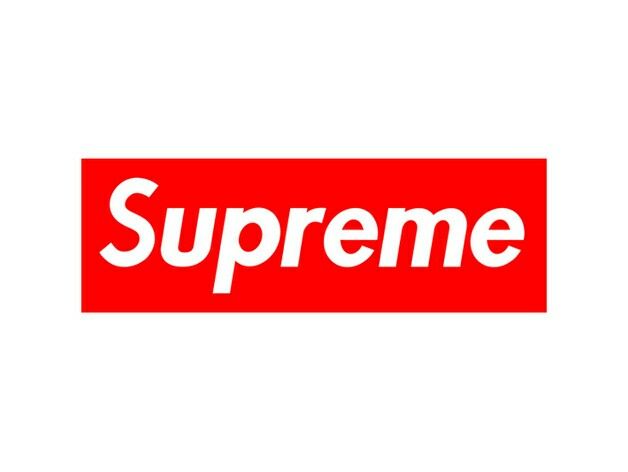
At first glance, the Supreme logo looks almost too simple—just a text logo inside a red rectangle. No icon, no complexity, no gradients.
And yet, it’s one of the most powerful and recognizable logos in modern culture.
So what makes it work?
1. Radical Simplicity: Nothing to Hide Behind
The logo consists of:
- A red box
- A white italic wordmark
That’s it.
Why it works:
- Instant recognition → The bold red block stands out anywhere
- Memorability → Simple shapes are easier for the brain to recall
- No visual noise → Every element is essential
👉 In a world of over-designed brands, simplicity becomes a competitive advantage.
2. Strong Visual Contrast
The logo relies on high contrast:
- Bright red background
- Crisp white typography
Why it works:
- Maximum visibility → Works on stickers, clothing, storefronts
- Legibility at any size → From tiny labels to large billboards
- Emotional punch → Red conveys energy, urgency, rebellion
👉 It’s designed to pop—especially in urban environments.
3. Typography: Attitude in Italics
The italicized sans-serif wordmark is subtle but important.
Why it works:
- Forward motion → Italics suggest speed and momentum
- Confidence → Slight slant gives it attitude without being aggressive
- Clean geometry → Keeps it modern and timeless
👉 The type carries personality—even without decoration.
4. The “Box Logo” System: Infinite Flexibility
One of the smartest design techniques here is the container system:
👉 A simple rectangle that can be applied anywhere.
Why it works:
- Modular branding → Easily placed on shirts, hats, skate decks, stickers
- Consistency → Same format across all products
- Scalability → Works in physical and digital spaces
👉 This turns the logo into a product stamp, not just an identity.
5. Cultural Positioning > Design Complexity
Here’s the real secret:
The Supreme logo isn’t just a design—it’s a cultural signal.
Why it works:
- Scarcity & drops → Limited releases increase perceived value
- Community identity → Wearing it signals belonging
- Street credibility → Rooted in skate and street culture
👉 The logo becomes a badge, not just a brand.
6. Borrowed Visual Language (Done Intentionally)
The design is heavily inspired by the work of artist Barbara Kruger, known for bold red-and-white text compositions.
Why it works:
- Art-world credibility → Elevates the brand beyond fashion
- Provocative tone → Feels bold, declarative, almost ideological
- Recognizable style → Familiar yet recontextualized
👉 It blurs the line between art, branding, and statement.
7. Timelessness Through Restraint
No gradients. No icons. No trends.
Why it works:
- Doesn’t age → Looks as relevant today as decades ago
- Easy reproduction → Works across all mediums without loss
- Enduring identity → Doesn’t need constant redesign
👉 The less you rely on trends, the longer your brand lasts.
Key Takeaways for Brand Builders
If you’re building a brand (especially in SaaS or consumer products), there are powerful lessons here:
- Simplicity can be more powerful than complexity
- A strong color + container system can scale everywhere
- Typography alone can carry brand personality
- Design matters—but culture and distribution matter more
- Create something that can become a badge of identity
Final Thoughts
The Supreme logo works not because it’s complex—but because it’s confidently simple and culturally charged.
It proves that a logo doesn’t need to explain everything.
Sometimes, it just needs to be bold enough to mean something.
And when that happens, a red box becomes a global symbol.

