
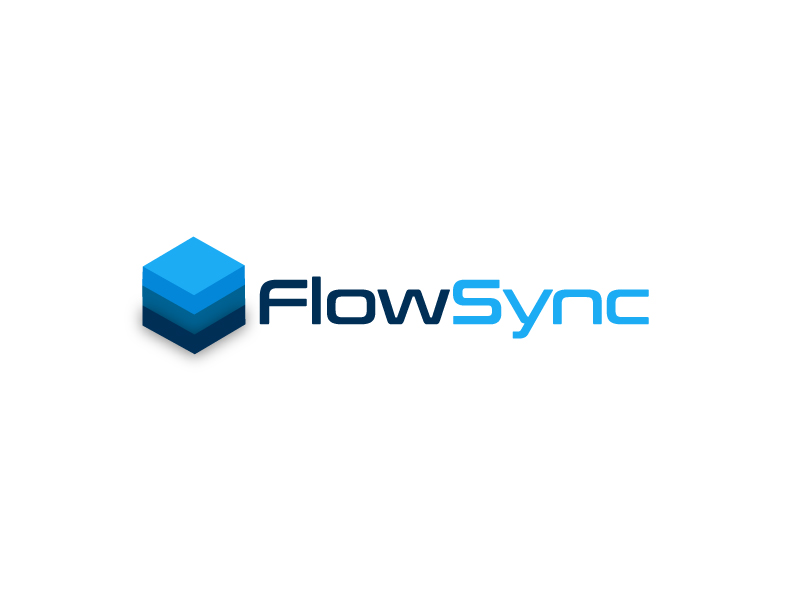
In the crowded SaaS landscape, a logo needs to communicate clarity, trust, and functionality—often in just a glance. The FlowSync logo achieves exactly that through a combination of geometric precision, color psychology, and subtle conceptual storytelling. Let’s break down why this design works so effectively.
1. The Icon: A Visual Metaphor for Structure & Flow
At the heart of the logo is a stacked geometric cube, rendered in layered blue tones.
Why it works:
- Modularity → The stacked layers suggest building blocks, systems, and structured workflows—core ideas in SaaS products.
- Flow representation → The subtle vertical stacking implies movement and progression, aligning perfectly with the name FlowSync.
- 3D depth → Adds sophistication and signals a modern, tech-forward product without being overly complex.
👉 This is a great example of abstract symbolism done right—it doesn’t try to be literal, but still communicates meaning intuitively.
2. Color Choice: Trust + Technology
The logo uses a blue gradient palette, ranging from deep navy to lighter cyan.
Why it works:
- Blue = trust, reliability, security → essential for SaaS platforms handling data or workflows
- Gradient = modernity → signals innovation and aligns with current tech branding trends
- Contrast balance → darker tones anchor the brand, while lighter tones add energy and approachability
👉 The gradient also enhances the 3D cube effect, making the icon feel more dynamic and alive.
3. Typography: Clean, Technical, and Balanced
The wordmark combines two tones:
- “Flow” in a darker shade
- “Sync” in a lighter blue
Why it works:
- Semantic emphasis → “Sync” stands out visually, reinforcing the product’s core value (synchronization)
- Sans-serif font → communicates clarity, simplicity, and digital-native identity
- Rounded edges → adds friendliness, avoiding a cold or overly corporate feel
👉 This subtle color split is a clever way to embed meaning into the typography without adding clutter.
4. Composition: Scalable and Versatile
The layout is a classic icon + wordmark horizontal lockup, which is ideal for SaaS brands.
Why it works:
- Highly scalable → works in app icons, dashboards, favicons, and marketing materials
- Flexible usage → icon can stand alone for product UI, while full logo works for branding
- Balanced spacing → the icon and text feel cohesive without competing for attention
👉 This is critical for SaaS, where logos must perform across many touchpoints—from product UI to landing pages.
5. Brand Story Alignment
The name FlowSync suggests:
- Automation
- Seamless processes
- Data synchronization
The logo reinforces all three:
- Flow → implied through layered movement
- Sync → represented by structured, aligned blocks
- Automation → clean, systematic geometry
👉 The strongest logos don’t just look good—they echo the product’s promise. This one does it elegantly.
Key Takeaways for SaaS Founders
If you’re building a SaaS brand, FlowSync offers a solid blueprint:
- Use simple geometric forms to convey complex systems
- Leverage color gradients to modernize your brand
- Align typography emphasis with product value
- Design for scalability across product and marketing
- Ensure your logo tells the same story as your product
Final Thoughts
The FlowSync logo succeeds because it strikes a rare balance: it’s minimal yet meaningful, modern yet timeless, and technical yet approachable.
It doesn’t rely on flashy gimmicks—instead, it uses thoughtful design principles to communicate exactly what a SaaS brand should: clarity, reliability, and seamless functionality.

