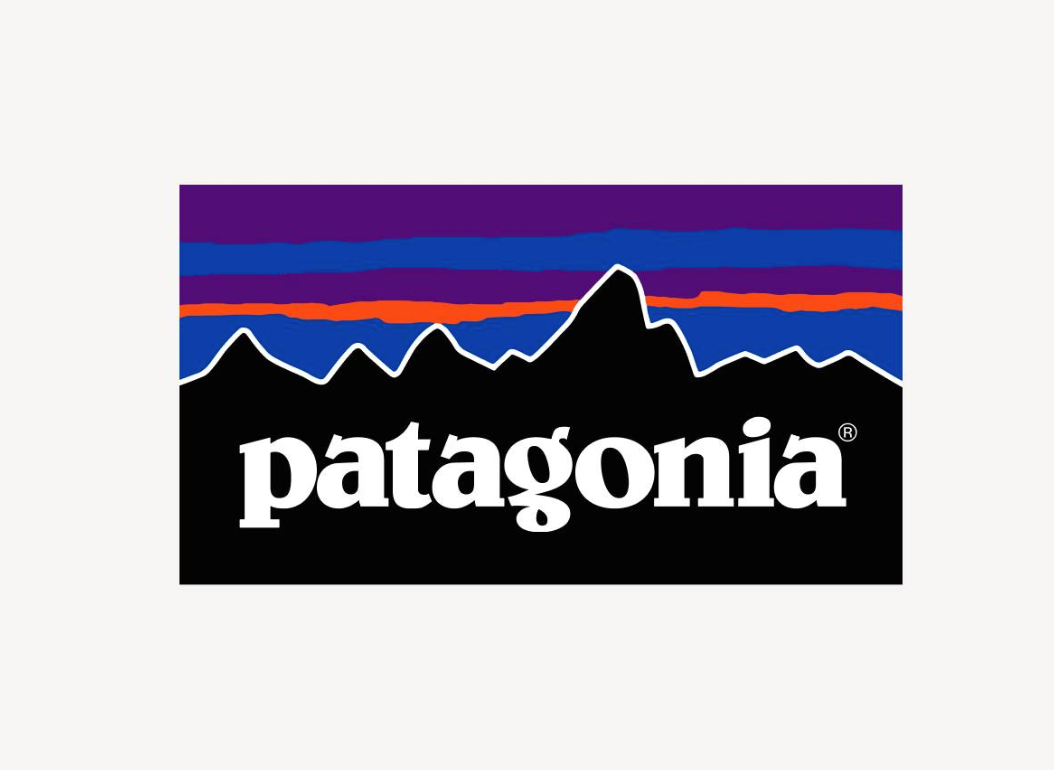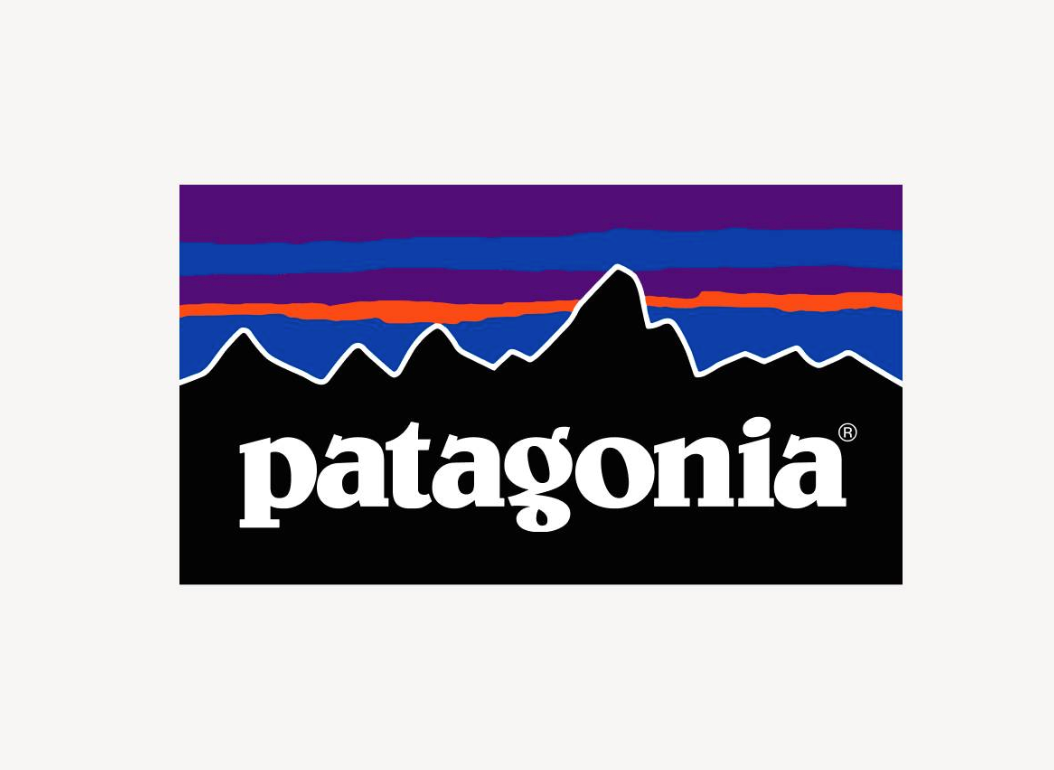
The Patagonia logo is a classic example of a scenic emblem logo, combining:
- Landscape illustration (mountain silhouette)
- Bold color bands (sunset sky)
- Clean wordmark
This style blends storytelling + place-based identity, making it more than just a logo—it’s a scene and a feeling.
🏔️ Key Characteristics of This Style
1. Landscape as Identity
- The silhouette represents Mount Fitz Roy
- A real, iconic mountain in Patagonia
👉 This grounds the brand in a specific place and experience.
2. Scenic Color Bands
- Purple, blue, and orange stripes mimic a sunset or sunrise
Why it works:
- Creates emotion (adventure, calm, nature)
- Adds visual richness without complexity
- Makes the logo instantly recognizable
👉 The colors feel like a moment in nature, not just decoration.
3. Strong Silhouette
- Black mountain shape with a sharp outline
Why it works:
- Easy to recognize at any size
- Creates contrast against the colorful sky
- Feels bold and grounded
👉 Great logos often rely on strong silhouettes first.
4. Simple Typography
- Clean serif “patagonia” wordmark
Why it works:
- Doesn’t compete with the illustration
- Feels timeless and trustworthy
- Balances the expressive graphic
🌍 Why This Style Works
This style is powerful because it communicates:
- Place → rooted in nature
- Emotion → adventure, exploration
- Values → environmental connection
- Story → not just what the brand is, but where it belongs
👉 It turns a logo into a visual experience.
🧭 When You Should Use This Style
✅ Best Use Cases
1. Outdoor & Adventure Brands
- Hiking gear
- Camping equipment
- Travel brands
2. Lifestyle Brands with Strong Identity
- Surf / snowboard brands
- Nature-focused apparel
3. Brands with a Story or Location
- Regional brands
- Tourism
- Craft / heritage products
4. Mission-Driven Brands
- Sustainability
- Environmental organizations
👉 Works best when your brand is about more than just a product.
❌ When NOT to Use It
1. SaaS / Tech Startups
- Too detailed and narrative
- Doesn’t scale well into UI systems
2. Minimalist Brand Systems
- Too expressive for ultra-clean design
3. Brands Without a Strong Story
- This style depends on meaningful context
⚙️ Design Technique Breakdown
What makes this logo especially effective:
- Color layering → creates depth without gradients
- Silhouette contrast → ensures readability
- Real-world inspiration → adds authenticity
- Balanced composition → illustration + text harmony
👉 It’s a perfect mix of art + branding.
💡 Key Takeaways
If you’re designing in this style:
- Start with a meaningful landscape or symbol
- Use limited but bold colors
- Keep the silhouette strong and simple
- Pair with clean typography
- Make sure it tells a story, not just a function
Final Thoughts
The Patagonia logo isn’t just a logo—it’s a place, a memory, and a philosophy.
It tells you:
“This brand belongs in the wild.”
Use this style when you want your brand to feel authentic, emotional, and deeply connected to something real.