
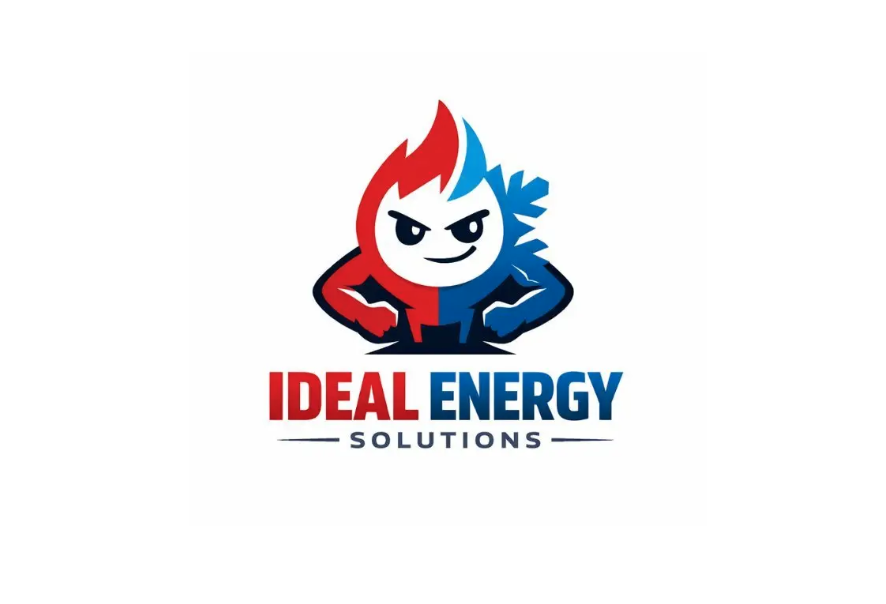
This is a mascot logo, where the brand identity is built around a character—in this case, a stylized energy figure combining fire and ice elements.
It’s a popular style in modern branding, gaming, and service businesses because it creates an immediate emotional connection.
Key Characteristics of This Logo
1. Character-Centric Design
- The main focus is a personified energy figure
- Split design:
- 🔥 Red flame (heat, power)
- ❄️ Blue ice (cooling, control)
👉 This duality visually communicates:
“We handle both sides of energy (heating & cooling).”
2. Strong Personality
- Confident stance (arms on hips)
- Slight smirk and sharp eyes
👉 Gives the brand a bold, reliable, slightly playful personality—not boring or corporate.
3. Bold, High-Contrast Colors
- Red vs Blue contrast
- White face for clarity
👉 This makes the logo:
- Highly visible
- Easy to recognize
- Emotionally charged (hot vs cold)
4. Thick Outlines & Simplified Shapes
- Cartoon-style rendering
- Clean edges and strong silhouette
👉 Ensures the logo works well:
- On trucks
- Uniforms
- Ads and signage
5. Supporting Typography
- Bold sans-serif for “IDEAL ENERGY”
- Smaller, spaced-out “SOLUTIONS”
👉 The text complements the mascot without overpowering it.
Why This Logo Works
This design is effective because it:
- Explains the business instantly (heating + cooling)
- Builds memorability through a character
- Feels approachable (not too corporate)
- Creates brand differentiation in a commoditized industry
👉 Compared to generic HVAC logos, this one actually has identity.
When You Should Use a Mascot Logo
✅ Best Use Cases
1. Local Service Businesses
- HVAC (like this example)
- Plumbing
- Electrical
- Cleaning services
👉 Mascots make brands feel friendly and trustworthy
2. Competitive Consumer Markets
- Where many brands look the same
- Mascots help you stand out quickly
3. Brands That Want Personality
- Fun, bold, approachable tone
- Not overly formal
4. Marketing-Heavy Businesses
- Ads, trucks, billboards
- Mascots are great for visual recall
When NOT to Use a Mascot Logo
❌ Avoid if:
1. Enterprise / B2B SaaS
- Feels less serious or scalable
2. Luxury Brands
- Mascots can feel less premium
3. Minimalist Brand Systems
- Too complex for clean UI environments
Design Technique Breakdown
What makes this mascot particularly strong:
- Concept clarity → fire + ice = core service
- Symmetry split → visually balanced and meaningful
- Expression design → confident but not aggressive
- Color psychology → intuitive (hot vs cold)
- Silhouette strength → recognizable even at a glance
👉 It’s not just a character—it’s a visual explanation of the business.
Key Takeaways
If you’re considering a mascot logo:
- Use a character that represents your core service
- Keep shapes simple and bold
- Make sure it works in real-world applications (vehicles, uniforms)
- Give it a clear personality aligned with your brand
Final Thoughts
Mascot logos like this turn a business into something people can recognize, remember, and even relate to.
Instead of just a name, you get:
A face, a personality, and a story.
Used correctly, it’s one of the most powerful ways to stand out—especially in industries where most brands look the same.

